


As a literature nerd, poems are a staple in my reading diet.
Sadly, many have the misconception that poetry’s just a jumble of words that don’t make sense. I beg to differ, good poetry is something that we can all learn to appreciate!
So, here’s a fun fact for you: Did you know that a third of the Bible is written in poetic form? From Psalms to Isaiah to Songs of Solomon, poetry is an intrinsic part of the Bible.
Still, we so often find it easier to skim over the poetry in favour of straightforward stories written in prose. Time to change that — by looking at why poetry in the Bible is so important.
Poetry versus prose
One distinct marker poetry has from prose is the use of rhyme and rhythm. Moreover, the language of poetry tends to be more expressive or decorated whereas prose often has a more fleshed out plot, setting and characters.
In the Bible, parables told by Jesus and the stories of kings and judges in the Old Testament are examples of prose. Consider the The Parable of the Lost Son:
‘“Jesus continued: “There was a man who had two sons. The younger one said to his father, ‘Father, give me my share of the estate.’ So he divided his property between them. “Not long after that, the younger son got together all he had, set off for a distant country and there squandered his wealth in wild living.”’ (Luke 15:11-13)
From here, we can see that prose contains continuous sentences that sound simply like spoken language.
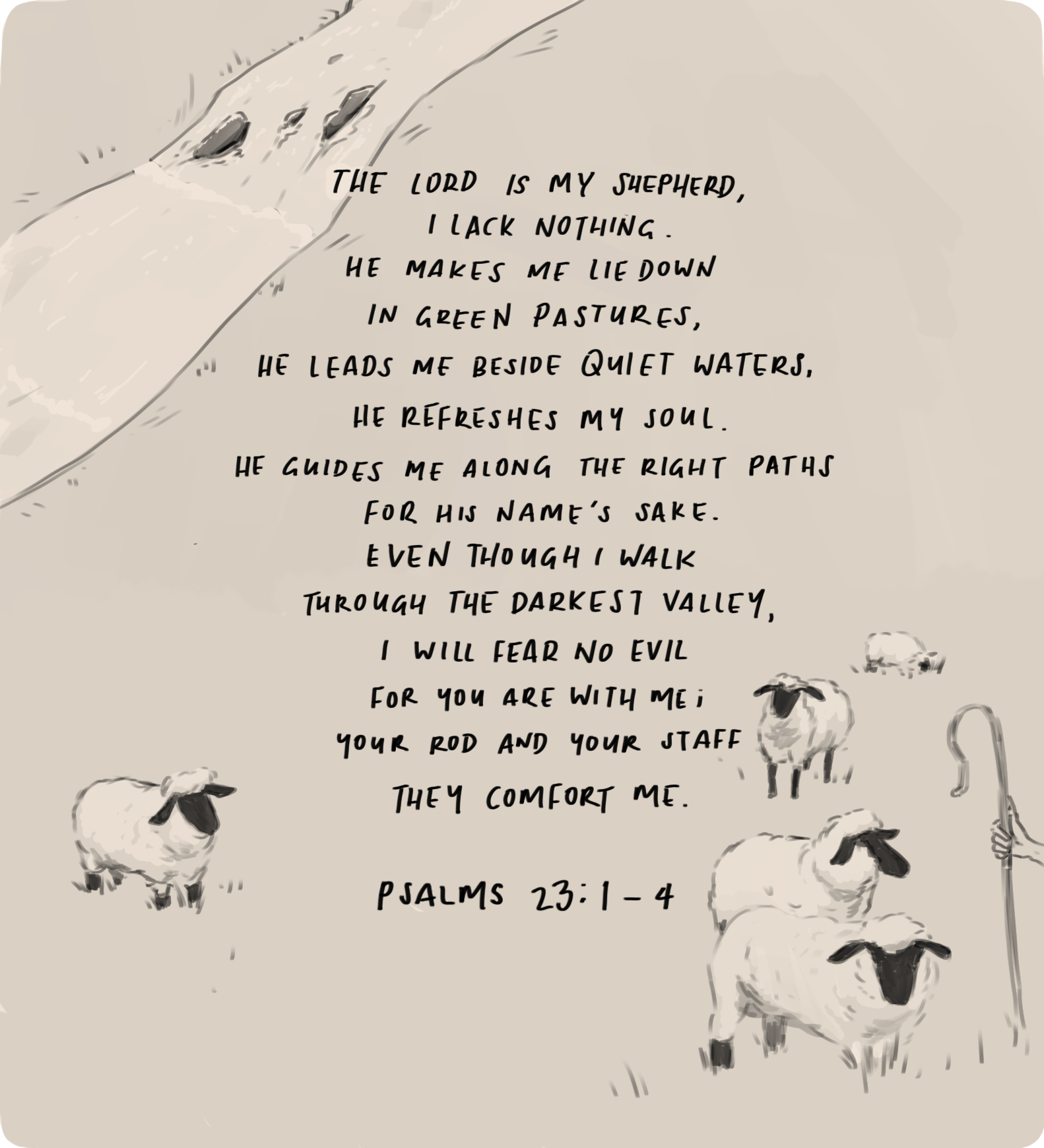
On the other hand, poetry is heavy on the use of line breaks and poetic devices such as personification, metaphors and repetition. The book of Psalms contains many examples of wonderful poetry.
“The Lord is my shepherd, I lack nothing. He makes me lie down in green pastures, he leads me beside quiet waters, he refreshes my soul. He guides me along the right paths for his name’s sake. Even though I walk through the darkest valley, I will fear no evil, for you are with me; your rod and your staff, they comfort me.” (Psalms 23:1-4)
Now that we have a clearer picture of what makes poetry and prose different, prose definitely seems much more straightforward which can make understanding much simpler.
It begets the question – why use poetry at all?
Why use or read poetry?
The reason biblical authors used poetry so heavily is due to poetry’s ability to convey feelings and thoughts in a unique and expressive way.
In the same way we write songs to express certain emotions, poetry does that too — you just might not hear the music.
While experiencing great anguish and torment, King David penned many of the Psalms we read and know today. Psalms 69, as seen below, aptly uses the metaphor of water to describe King David’s feeling of drowning.
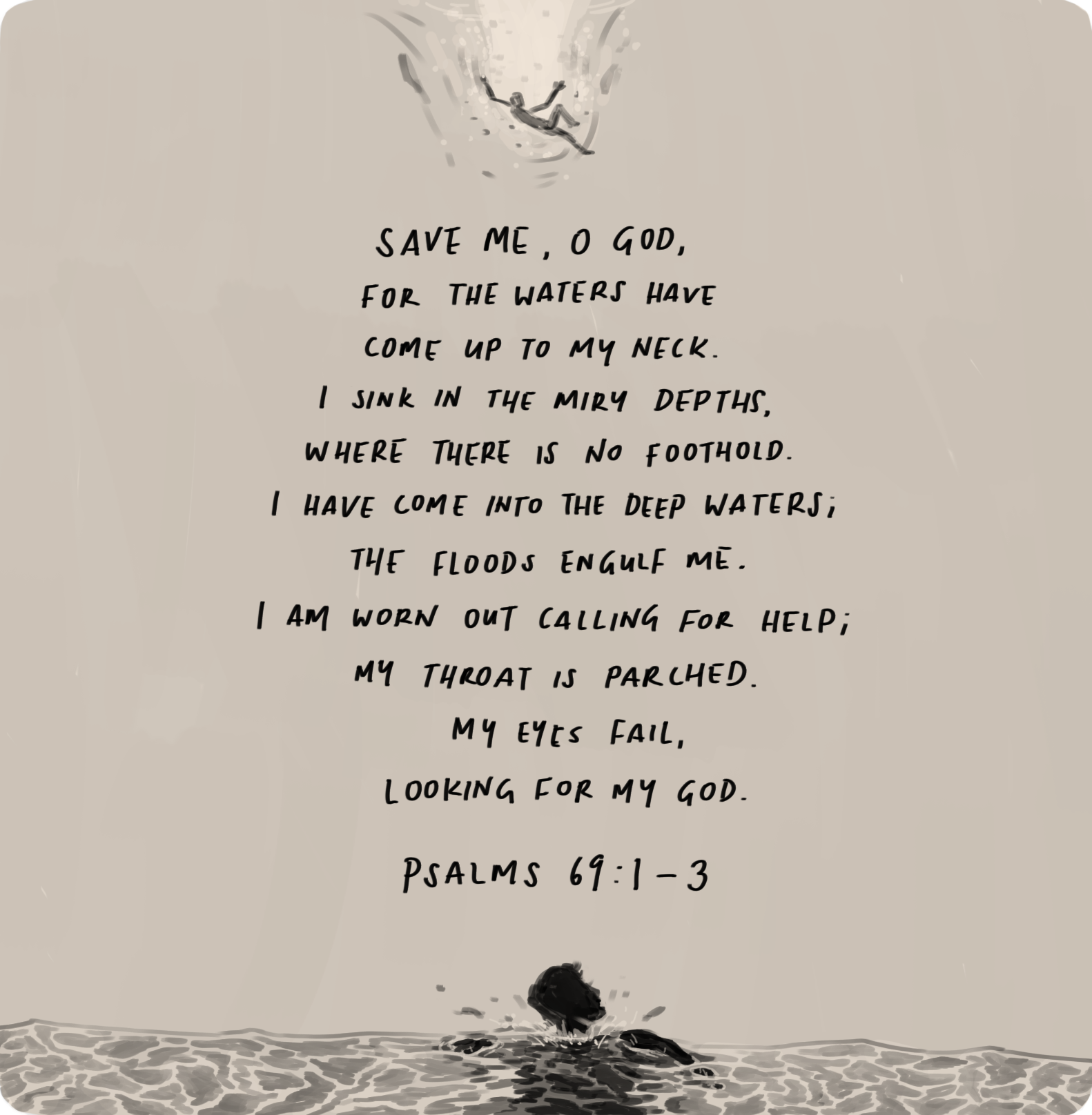
“Save me, O God, for the waters have come up to my neck. I sink in the miry depths, where there is no foothold. I have come into the deep waters; the floods engulf me.
I am worn out calling for help; my throat is parched. My eyes fail, looking for my God.” (Psalms 69:1-3)
The book of Lamentations also poignantly captures the sorrow and woe felt upon the impending doom of Israel.
Lamentations 4 uses jewels and the colour white in contrast with soot and dryness to highlight how Israel has become sinful.
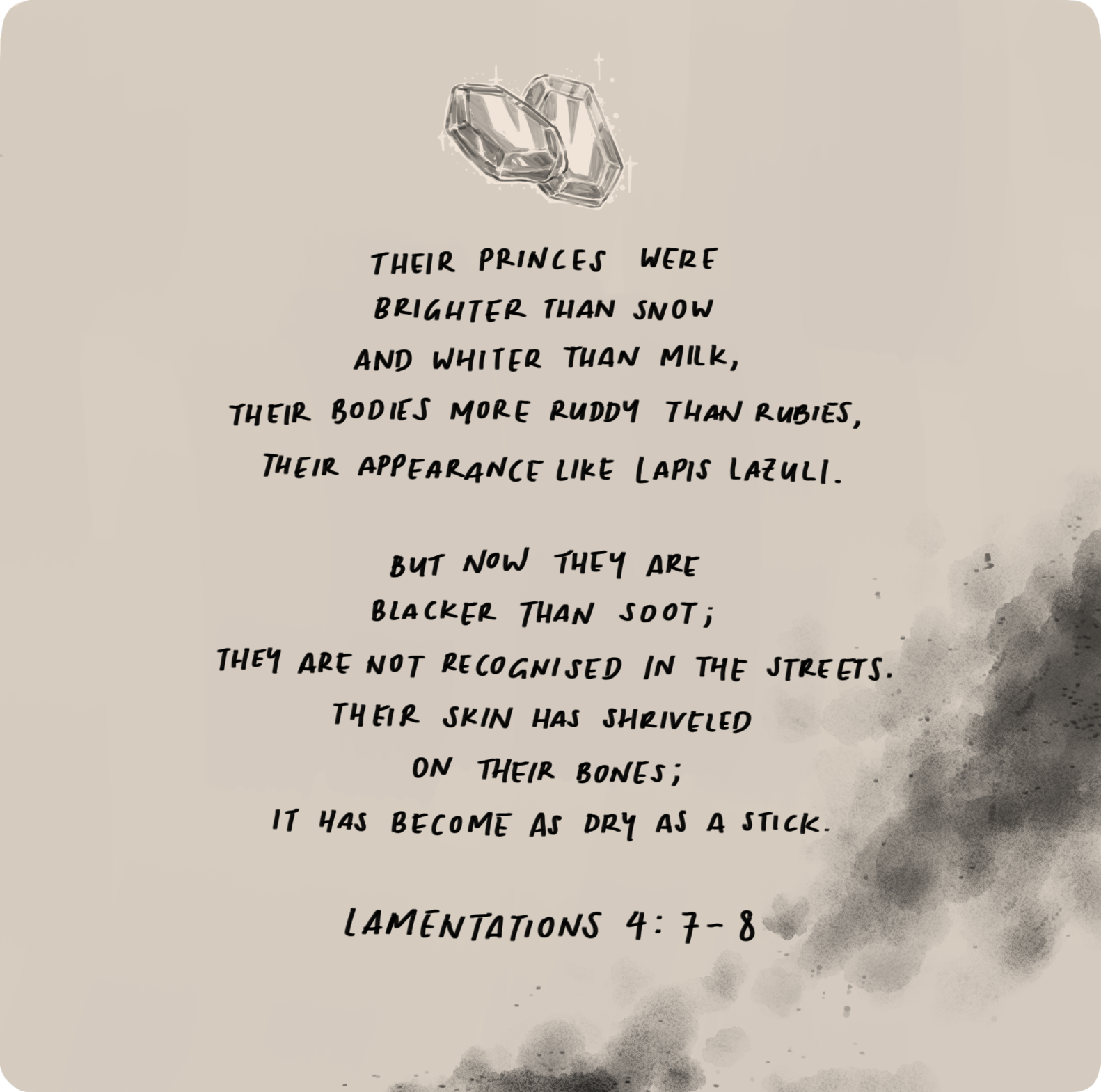
“Their princes were brighter than snow
and whiter than milk,
their bodies more ruddy than rubies,
their appearance like lapis lazuli.
But now they are blacker than soot;
they are not recognized in the streets.
Their skin has shriveled on their bones;
it has become as dry as a stick.” (Lamentations 4:7-8)
Through poetry, complex emotions and experiences are able to be fleshed out like this. Thus, readers are able to empathise and share in the same grief, sorrow or feeling.
The second reason is that poetry reflects God’s creativity.
We are created in God’s image, who is the Creator (Genesis 1). Poetry is one of the many ways humans can express the same creativity we have been blessed with.
At times, poetry might seem too difficult to understand and avoiding it could appear to be the way to go. However, that would be a huge waste.
Our life’s desire should be wanting to cultivate a deeper relationship with our Father in Heaven (James 4:8), and only reading through certain parts of the Bible will not suffice.
We’ve got to read it all: the easy-to-read parts, the creative parts, the artistic parts.
Hence, engaging with the poetry in the Bible is essential in getting know more about our Creator God.
3 poems for encouragement
Now that we’ve underlined the importance of this genre in the Bible, let me wrap up this article by sharing three of my favourite poems from the Bible.
These will serve to encourage and strengthen you as you seek to know more about God.
1. Psalms 19:1-4
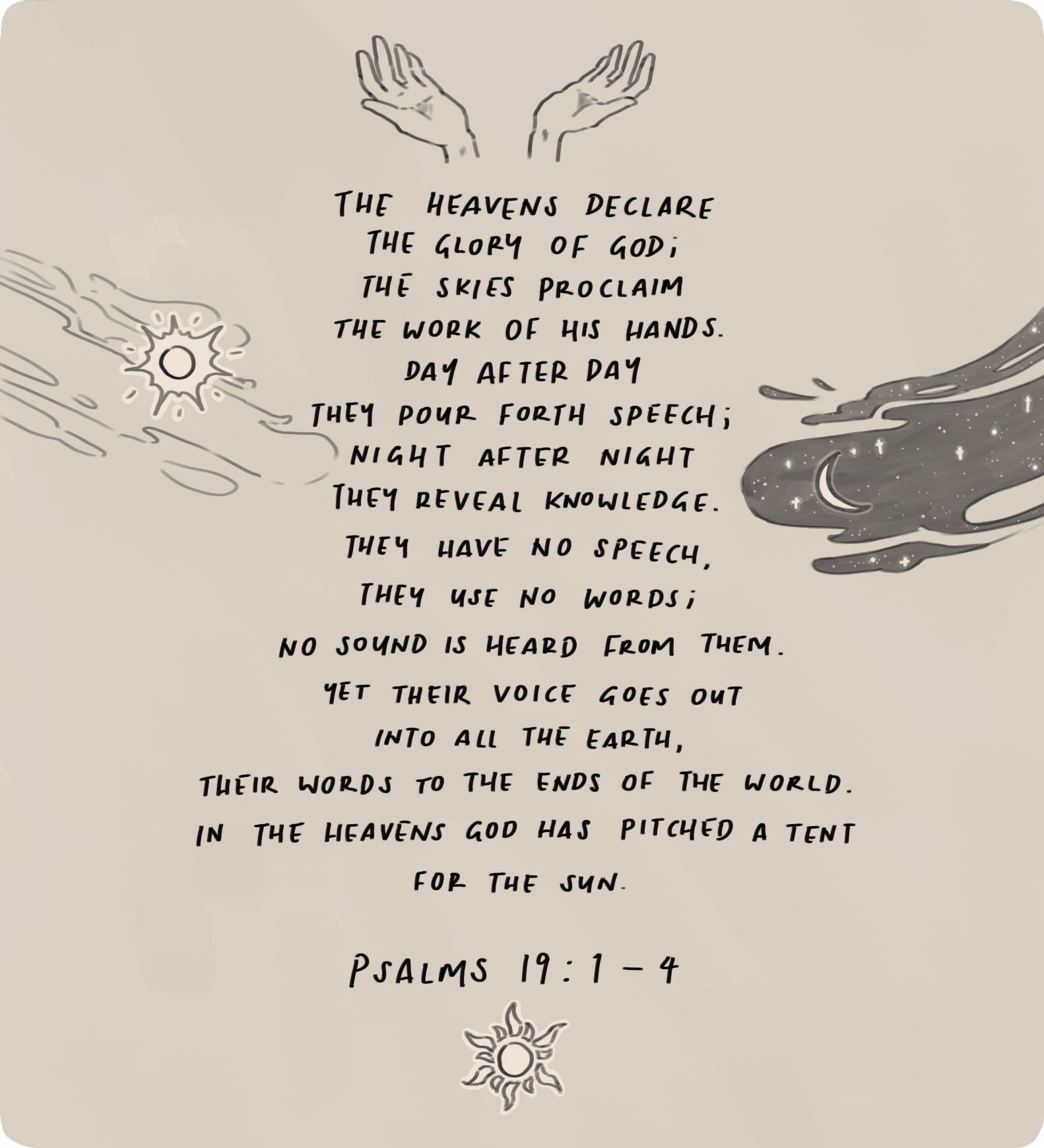
“The heavens declare the glory of God;
the skies proclaim the work of his hands.
Day after day they pour forth speech;
night after night they reveal knowledge.
They have no speech, they use no words;
no sound is heard from them.
Yet their voice goes out into all the earth,
their words to the ends of the world.
In the heavens God has pitched a tent for the sun.” (Psalm 19:1-4)
These few verses employ the use of personification to show how majestic God’s handiwork is.
We are left in awe of the grandeur of His creation and we know that the glory of God is on full display for all of the world to see.
2. Ecclesiastes 12:6-7
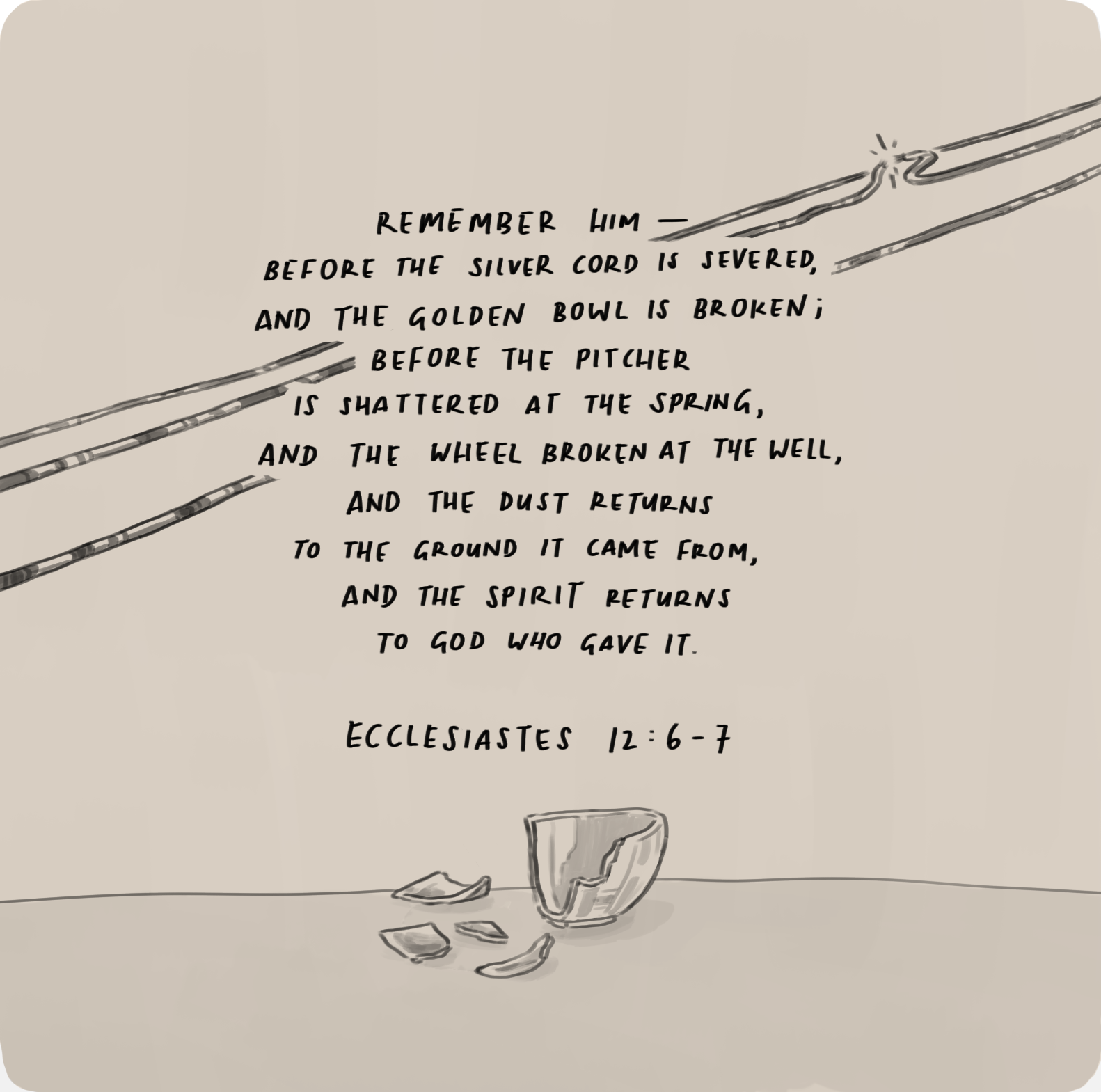
“Remember him—before the silver cord is severed,
and the golden bowl is broken;
before the pitcher is shattered at the spring,
and the wheel broken at the well,
and the dust returns to the ground it came from,
and the spirit returns to God who gave it.” (Ecclesiastes 12:6-7)
Though the tone is sombre, Ecclesiastes 12 highlights the importance of remembering God before this life is over.
For one, the images of “silver” and “gold” point to the value of life. Furthermore, the descriptions of things being broken into pieces also show how the end of a life is irreversible, something that cannot be put together again.
Thus an image comes together that underscores the fleeting nature of life and why we must have the urgency to remember who God is while we are still on this earth.
3. Isaiah 40:29-31
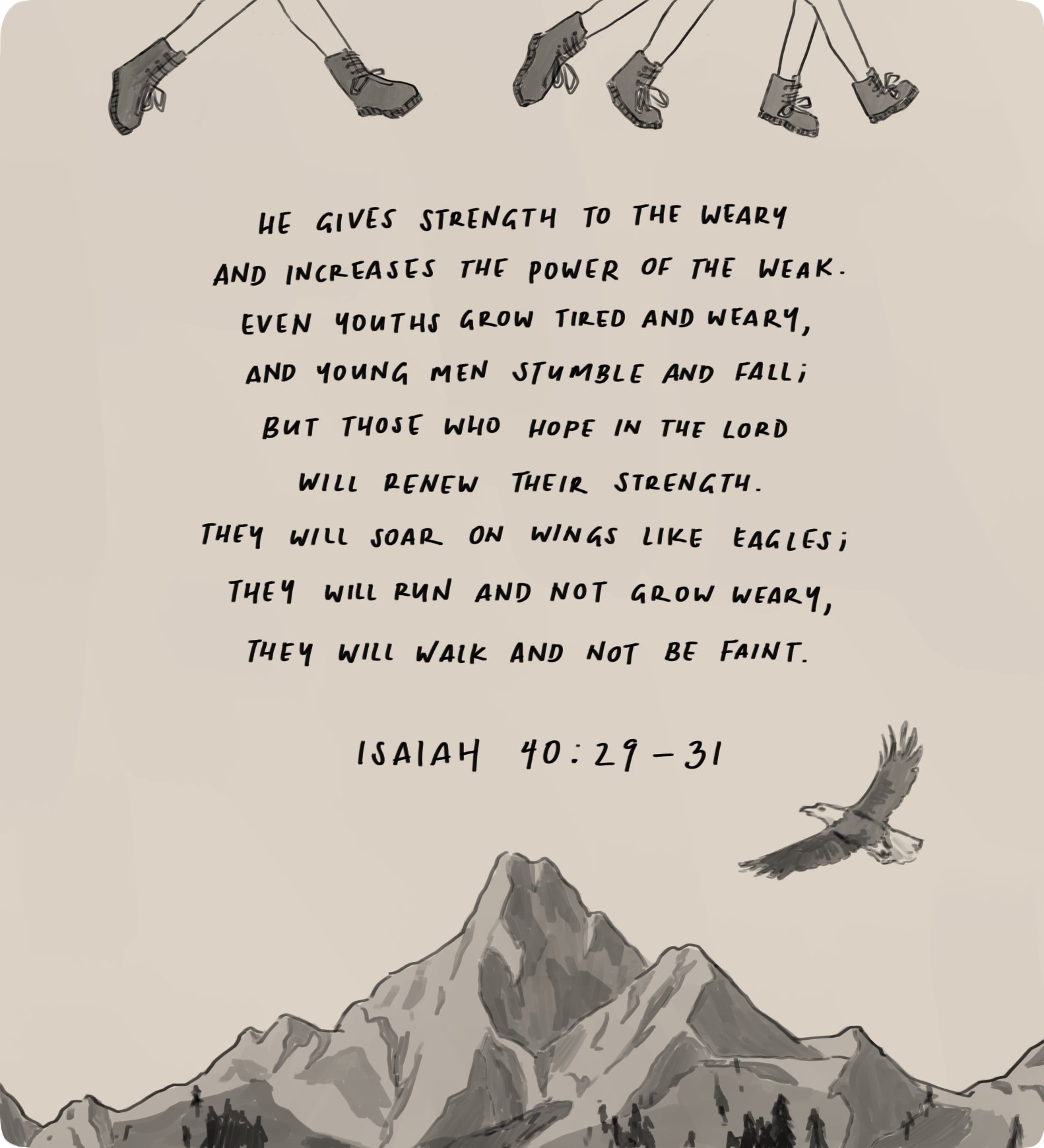
“He gives strength to the weary
and increases the power of the weak.
Even youths grow tired and weary,
and young men stumble and fall;
but those who hope in the Lord
will renew their strength.
They will soar on wings like eagles;
they will run and not grow weary,
they will walk and not be faint.” (Isaiah 40:29-31)
A commonly quoted verse, the simile used here is simple to grasp.
In times of darkness, we remember that God is our provider and source of strength. If we trust in God, He will allow us to become like eagles, to take flight and have the power to continue on in what He has called us to do.

- What is your favourite poem from the Bible?
- Take some time to write a short poem to express your love for God today!


